
Derila Ergo vs Standard Memory Foam Pillow
The Derila Ergo wins for neck pain and side sleeping because its four-zone butterfly contour holds cervical alignment that a flat memory foam pillow cannot. A standard memory foam pillow is fine for healthy sleepers with no pain, but the Derila's shoulder relief curve and cooling cover make it the better long-term ergonomic choice.
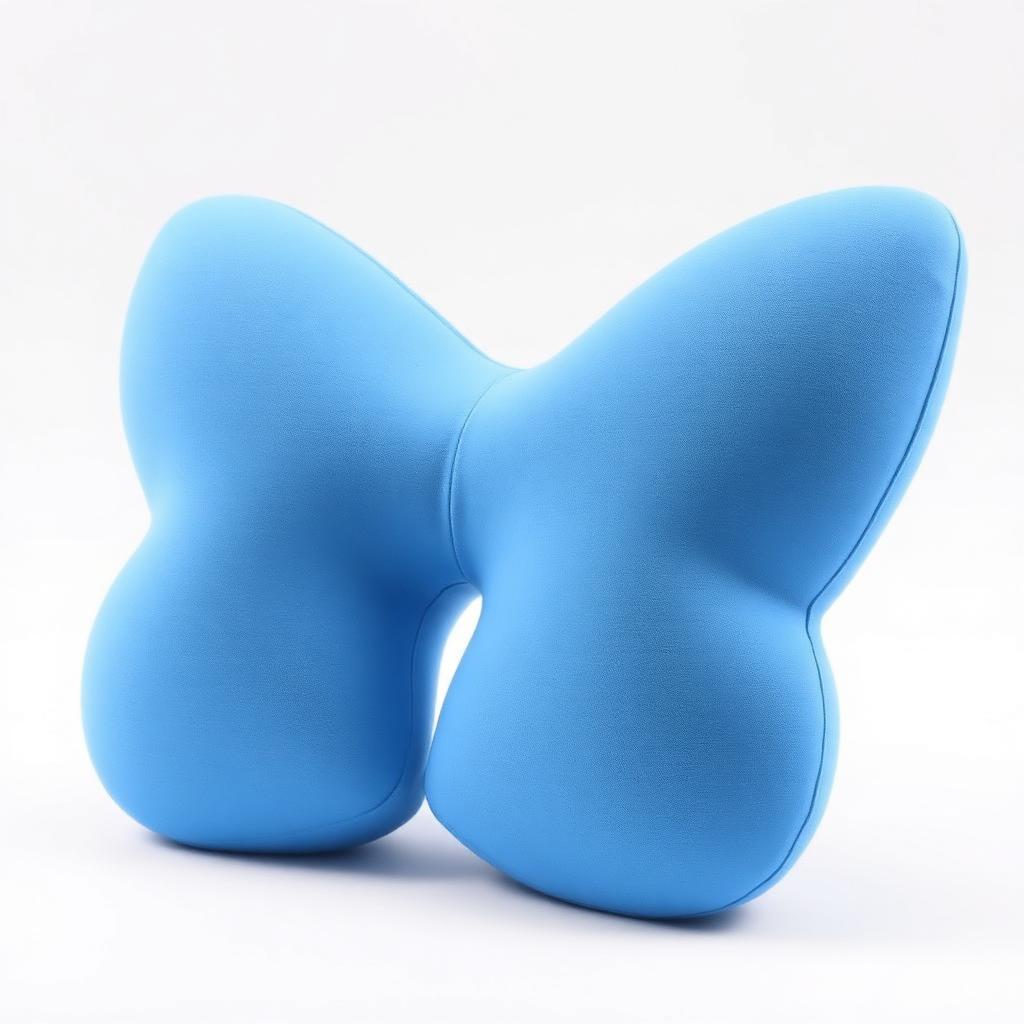
Side-by-side comparison
| Feature | Derila Ergo | Standard Memory Foam |
|---|---|---|
| Shape | Four-zone butterfly contour | Flat block |
| Cervical support | Targeted, position-specific | Uniform |
| Shoulder relief | Dedicated cutout | None |
| Temperature | Cooling cover, contour airflow | Traps heat |
| Best for | Side & back sleepers with neck pain | General use |
| Lifespan | 3 to 5 years | 1 to 3 years |
The real difference: shaped support vs. even support
Both pillows are memory foam, so the material is not what separates them — the shape is. A standard memory foam pillow is a uniform slab. It compresses under the heaviest point, which is the back of your skull, and gives you roughly the same height everywhere else. That is fine if your head and neck happen to need the same height, which is broadly true when you sleep on your back.
The problem is that your neck is not the same height as your head. Lying on your side, there is a gap between your ear and the outside of your shoulder that needs filling, and a hollow under your neck that needs supporting — two different heights, a few centimetres apart. A flat pillow can only satisfy one of them. The Derila Ergo's contour is an attempt to solve that geometry: a raised section under the neck, a lower central depression for the skull, and higher outer wings for side sleeping.
Where a plain memory foam pillow is genuinely better
We would not tell you the contour always wins. A flat memory foam pillow is the better choice in three situations. If you sleep on your stomach, you want the lowest profile you can get, and a contour holds your head too high. If you move constantly and end up sleeping across the pillow rather than in the middle of it, a contour is wasted — its benefit depends on your head sitting where the designer expected. And if you simply dislike being told where to put your head, a slab is more forgiving; plenty of people find contoured pillows oddly restrictive for the first week and never warm to them.
Cost over time, not cost on the day
A cheap memory foam pillow usually costs less up front, but the relevant number is cost per night of decent sleep. Density is what determines how long foam holds its shape: low-density foam softens and stays dented, and once it does, it stops supporting you regardless of its original shape. If you find yourself folding a pillow in half or stacking a second one on top, it has already failed — and that tends to happen sooner with budget foam than with a denser core.
Which should you choose?
If you have neck or shoulder pain, or you sleep on your side, the Derila Ergo is the more sensible buy: its contour does the work that a flat pillow asks your muscles to do all night. If you sleep on your stomach, move a lot, or have no alignment problems to solve, a standard memory foam pillow is a comfortable and cheaper option — and you are not missing much. Whichever you pick, buy from somewhere with a real returns window, because a pillow's suitability is not something you can judge in a shop.
Frequently asked questions
Related: Full Derila Ergo review · Memory foam chemistry explained · Best pillows for neck pain